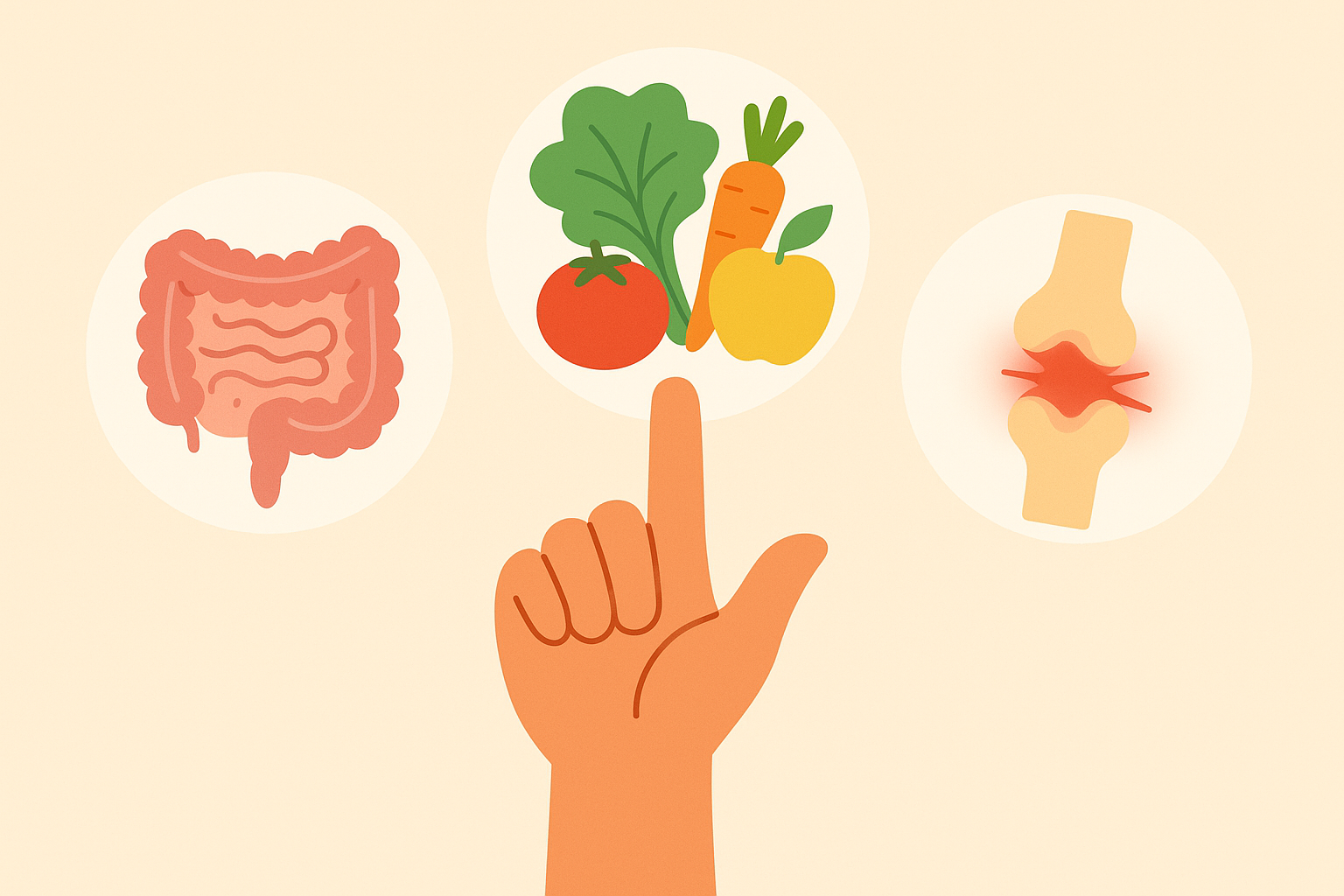
Arthritis, though most commonly associated with joint pain in one’s hands, knees or hips, is increasingly being recognised not just as a “wear-and-tear” or purely mechanical problem, but also as a disease with deep roots in metabolism, immunity and even the gut health.
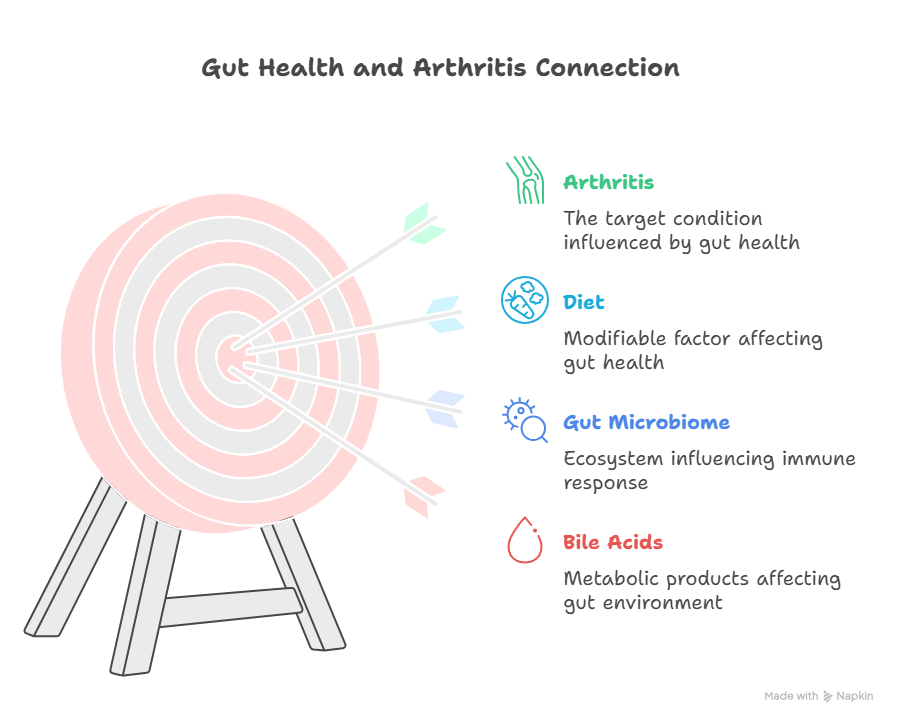
In this article, we explore emerging evidence showing how the gut microbiome, its metabolites (especially bile acids), and diet may intersect in the so-called “gut-joint axis”. This is especially relevant for people with arthritis (both rheumatoid arthritis, OA, and other sub-types) and for anyone seeking an evidence-based way to support joint health.
We’ll walk you through:
What the gut microbiome & bile acids are
What recent research shows about their link with arthritis
What diet can realistically do today
FAQs and points to keep in mind
Final thoughts.
Let’s dive in
1. The Gut Microbiome, Bile Acids & the Gut-Joint Connection
The gut microbiome
The term gut microbiome refers to the trillions of bacteria, viruses and other microbes living in our intestines, and their genes and by-products. These microbes influence digestion, immune function, metabolism (among many things). Growing research shows that people with forms of arthritis often have an altered gut microbiome (“dysbiosis”) compared to healthy individuals.
Bile acids: more than just fat digesters
Bile acids are produced in the liver, stored in the gallbladder and released into the intestine to help digest fats. But what is less well-known is that many bile acids get modified by gut bacteria into secondary bile acids, and these in turn act as signalling molecules — influencing immunity, inflammation, the gut barrier and possibly even tissues far from the gut, including joints.
The “gut-joint axis”
Emerging reviews refer to a “gut-joint axis”, meaning that disturbances in the gut (microbiome, microbial metabolites, barrier integrity) may influence joint health via immune and metabolic pathways. For example, a 2022 review laid out how gut microbial metabolites may regulate intestinal barrier integrity, immune balance and bone metabolism in the context of rheumatoid arthritis (RA).
2. What Recent Research Is Showing — Highlights
Integrating Gut Health and Arthritis
As a recent review notes, diets and gut microbes can profoundly affect joint health. For example, Longo et al. conclude that “accumulating evidence highlights that the gut microbiota could represent an important part not only in metabolic, immune-mediated, and neurological illnesses but also in joint inflammation.” They further explain that environmental factors like “poor diets” can harm the gut flora, leading to a disrupted gut barrier. This allows bacterial byproducts to flood into the body and trigger inflammation that eventually reaches the joints. In other words, gut dysbiosis and dietary choices may drive the low-grade inflammation seen in arthritis. –researchgate.net
Dysbiosis & arthritis
In people with both OA (osteoarthritis) and RA, studies show differences in gut microbial composition compared to healthy controls (for example, lower diversity, altered abundance of specific bacterial genera).
- A 2024 study used Mendelian randomisation (genetic proxy) and found causal associations between certain gut microbes and risk of various arthritis types. Nature
Another study from the Mayo Clinic found that the baseline gut microbiome of RA patients could help predict whether they would achieve clinical improvement under treatment. Bile acids, gut microbiome & bone/joint damage
The pre-print article titled “Microbiome-derived bile acids contribute to elevated antigenic response and bone erosion in rheumatoid arthritis” (arXiv:2307.08848) investigates exactly this link:
It found that in RA patients, especially those who were ACPA-positive (i.e., had anti-cyclic-citrullinated-peptide antibodies), there was a distinct microbial profile: more Bacteroides species expressing bile salt hydrolase (BSH) and 7α-HSDH enzymes, leading to elevated secondary bile acid production.
This dysregulated bile acid metabolism (and lower FGF-19, a hormone of the bile acid axis) was associated with more bone erosion and higher auto-antibody levels.
The authors suggest a potential causal effect of the gut microbiome → bile acid metabolism → joint damage (bone erosion) in RA.
Diet, microbiome and arthritis
Dietary patterns influence gut microbiome composition (e.g., fibre, fermented foods, processed foods) and thus may indirectly impact arthritis risk/severity. For example, a narrative review pointed out that diet and gut dysbiosis are linked in RA.
In the context of OA, a review noted that nutrients, prebiotics and other dietary factors that improve gut microbiota status may reduce joint damage and pain.
3. What This Means for Diet & Joint Health — Practical Take-aways
While research is still evolving (and we cannot claim “cure” or guarantee prevention), the evidence suggests that paying attention to diet and gut health may be a meaningful part of an arthritis support strategy. Here are some practical suggestions:
Focus on gut-friendly, anti-inflammatory foods
Increase dietary fibre (whole grains, legumes, vegetables, fruits): Fibre fosters diverse microbial populations and leads to beneficial metabolites (like short-chain fatty acids) which support gut barrier integrity and reduce inflammation.
- Include fermented foods (e.g., yoghurt, kefir, tempeh, sauerkraut) or probiotic foods: These can enhance beneficial microbes and may support gut barrier and immune health.
- Choose healthy fats, especially omega-3 fatty acids (oily fish, flaxseed, chia): Omega-3s have known anti-inflammatory effects, and may support both gut and joint health.
Adopt a plant-rich, minimally processed diet (for example, Mediterranean style): Researchers consistently find that diets high in processed foods, refined sugars/fats are worse for gut microbiome diversity and inflammation.
Limit or avoid foods that may harm gut & joint health
Ultra-processed foods, high sugar, high saturated fat: These are linked to microbiome reductions in diversity and increases in inflammation.
Very low fibre diets: These may starve beneficial microbes and lead to negative changes in gut composition.
Excessive alcohol, frequent antibiotics (if not medically necessary): These can disrupt the gut microbiome significantly.
Anti-Inflammatory Diets for Arthritis
Specific to arthritis considerations
Maintaining a healthy weight helps: Extra weight puts more mechanical load on joints and is independently pro-inflammatory. A diet that supports gut health often supports healthy weight too.
Gut barrier integrity matters: A leaky gut (impaired barrier) may allow microbial products to pass into circulation, stimulating systemic inflammation that may affect joints. Evidence shows bile-acid and microbial metabolites are involved in this.
There is no “one size fits all”: Each person’s gut microbiome is unique, genetics vary, arthritis type differs (RA vs OA vs others). Dietary changes should be sustained, realistic and part of a broader lifestyle strategy (exercise, sleep, stress management).
What we don’t yet know (so no over-claims)
We don’t yet have large long-term human clinical trials that prove modifying bile acid metabolism will reverse arthritis (although pre-clinical evidence is promising).
We cannot say that a specific probiotic or supplement will guarantee joint improvement.
We don’t yet know the optimal “gut microbiome” composition for people with arthritis (it likely differs by type and person).
Final Thought on Gut Health and Arthritis Relation
Supporting a healthy, balanced gut microbiome (for instance, by eating more fiber and fermented foods while limiting ultra-processed items) may help reduce systemic inflammation and benefit joint health. This emerging gut–joint link suggests that diet is an important part of an arthritis care plan, alongside medical treatment and lifestyle measures. –researchgate.net
In the evolving story of arthritis and joint health, the gut has emerged as an important chapter. The emerging evidence—such as the recent study on gut-microbiome derived bile acids in RA (arXiv:2307.08848) and broader work on the gut-joint axis—suggests that what we eat and how our gut microbes respond may influence not just digestion but the very health of our joints.
For anyone living with arthritis, or seeking to reduce risk, the message is encouraging: focusing on gut-friendly, anti-inflammatory foods, supporting a diverse microbiome (via fibre, fermented foods, healthy fats), and avoiding gut-stressors (ultra-processed foods, sugar-rich diets) can be meaningful steps. These changes, when integrated into a broader lifestyle approach (exercise, weight management, stress/sleep optimisation) and medical care, may offer better joint outcomes.
At the same time, it’s important to remain realistic: the science is promising but still emerging. Diet is not a standalone cure—but it is a tool in your toolbox. As our understanding of the gut-microbiome-joint axis deepens, we may see more targeted interventions (perhaps even bile-acid targeted therapies) emerge.
If you have arthritis and are considering significant dietary changes (especially if you’re on medications or have co-morbidities), do discuss this with your rheumatologist or a dietician who understands arthritis and gut health.
Frequently Asked Questions (FAQ)
Q1. Can changing my diet fix my arthritis?
A: No diet alone can guarantee a cure. But diet can be a powerful adjunct: by supporting healthier gut microbiome, reducing systemic inflammation and perhaps slowing joint damage. It should work alongside medical care, physiotherapy, weight management and other interventions.
Q2. Does this apply to all types of arthritis (RA, OA, psoriatic, etc.)?
A: Much of the detailed bile acid research focuses on RA (autoimmune arthritis). But there is growing evidence that the gut-microbiome axis plays a role in OA and other forms too. For example, the review on OA noted gut microbiota may influence OA via immune, metabolic and gut–brain axis pathways.
Q3. Should I take probiotics or prebiotics to improve my joint health?
A: Probiotics/prebiotics may help gut microbiome health, but the evidence specifically for improving joint outcomes is still emerging. It’s sensible to choose a diet rich in fibre (prebiotic) and fermented foods rather than relying solely on supplement pills. Always check with your physician first.
Q4. What’s the role of bile acids in all this?
A: Bile acids are produced in our liver and modified by gut microbes into secondary bile acids — these act as signalling molecules that influence gut barrier, immune responses and even bone/joint destruction. The arXiv study (2307.08848) showed an association between dysregulated bile acid metabolism in RA patients and increased bone erosion.
Q5. How quickly will I see changes in my joints if I improve my diet?
A: It varies widely depending on your arthritis type, severity, overall health, medication/therapy you already have, and how much change you make. Some people report improved pain and mobility within weeks after adopting healthier diets; for others it may take months. The goal is sustained change, not quick fix.